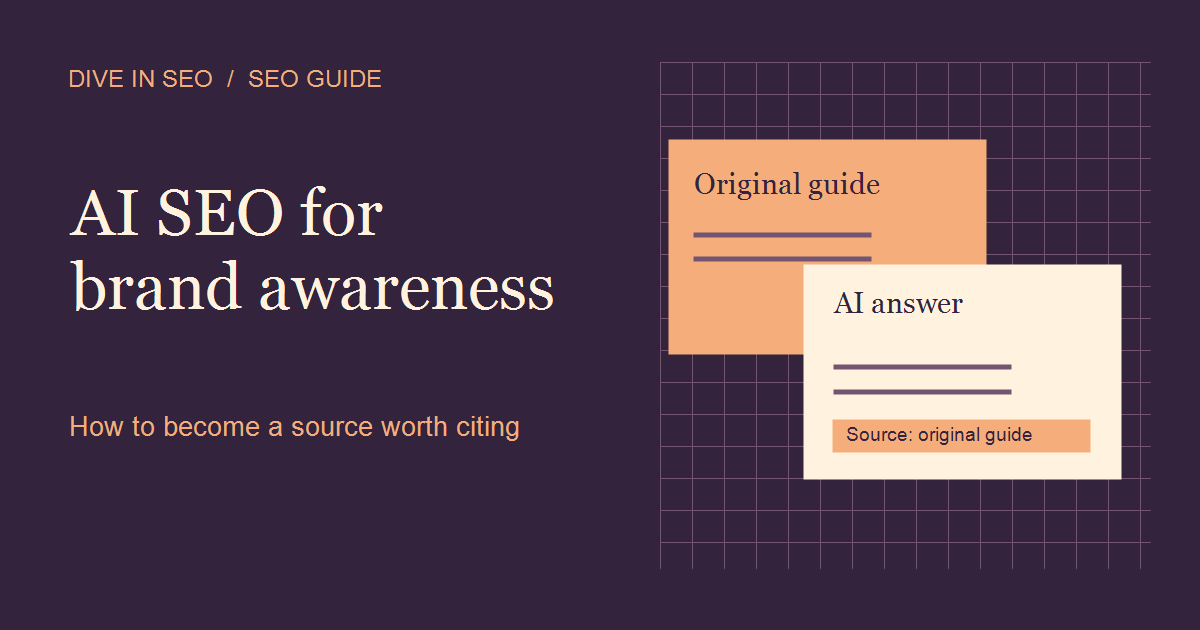
The best AI SEO strategy for brand awareness is to become a credible source for the questions people ask before they know your name. Pick a specific buying question, publish something useful enough to reference, and give the reader a clear way to recognise who made it. Start there before you buy a monitoring subscription or commission another batch of articles.
Start with the decision buyers are trying to make
Imagine you run a commercial cleaning company. A facilities manager may ask an AI assistant, “What should I check before hiring an office cleaner for a site that stays open overnight?” They want to know about access, supervision and handovers. A general page about professional cleaning rarely gives them enough to work with. A checklist that explains who holds keys, how incidents are reported and what the morning team should inspect gives them something they can use in a supplier meeting.
You can find questions like this in sales calls, onboarding emails and the search queries that already bring people to your site. Ask the team which question they answer repeatedly and which detail changes the recommendation. That second part is where your experience starts to show. For example, a checklist for an overnight site might need a section on lone working that would take up very little space in a guide for a daytime office.
Pick a topic close enough to the work you want to win. A checklist on cleaning a sofa may attract attention, but it does little to help a facilities manager remember you when tendering for an office contract. Our guide to building an SEO content strategy explains how to connect a buyer question to the right page.
Where should you spend the first month?
| What you find | Start here | What to check next |
|---|---|---|
| Your best guide is hard to find or absent from search. | Check indexing, internal links and crawl access. | Can a visitor find the guide from a relevant service page? |
| Your pages repeat advice buyers can get anywhere. | Publish a decision aid based on work your team knows. | Does it answer a question the buyer would take to a meeting? |
| Your site has useful material but few outside references. | Share the strongest resource with relevant publishers or partners. | Did anyone refer to it in a context your audience would trust? |
| You already appear in some answers but cannot tell why. | Record a baseline of prompts, mentions and cited URLs. | Which questions and pages show up repeatedly? |
If your site has an indexing problem, fix that first. Google’s guidance on AI features says a page needs to be indexed and eligible for a search snippet to appear as a supporting link in AI Overviews or AI Mode. It does not require special markup or a separate AI file. Check the actual URL in Search Console, look for accidental noindex directives, and make sure relevant pages link to it. A technical SEO review can help if the problem affects whole sections of the site.
For ChatGPT search, OpenAI’s publisher guidance describes OAI-SearchBot access and referral tracking. Check that your crawler rules and hosting protections reflect how you want public pages to be discovered. Review those settings separately from decisions about model training. Access makes discovery possible; it does not promise a citation.
Make one page worth citing
A strong resource has a clear owner and a detail that would be difficult to lift from a competitor’s page. That might be a blank inspection checklist, a worked example with its assumptions, or a comparison based on criteria you use with customers. You do not need proprietary research to write a useful guide. You do need to explain where a recommendation applies and when you would change it.
For the cleaning example, put the checklist on a readable web page. Explain why each check is there and what a reasonable answer looks like. A downloadable version can be handy for a site visit, but the important guidance should also be readable without the download. Give the page a descriptive title, a clear byline and a link to the team or business behind the advice. If the checklist changes, update the date when you actually review it.
Connect the guide to a relevant service page so the reader can see what help is available. From the service page, link back to the guide where people are likely to have that question. Those links help visitors move between research and a decision. If you are sorting out what falls under AI SEO, our guide to SEO, AEO and GEO explains the overlapping terms.
Give other people a useful reason to mention you
Send the finished resource to people whose readers already face the problem. A facilities newsletter may want a short extract for its subscribers. A supplier may want to include the checklist in a handover pack. Offer the relevant part, explain who it helps, and let the recipient decide whether it belongs. If you cannot explain why their audience needs it, move on to a better contact.
Keep your brand name and description consistent on the website and on profiles you control. If a publication names an old service or links to a retired page, ask for a correction where it would help readers. Our link building and digital PR service covers how we assess the fit between a resource and the people who might reference it.
Measure mentions, citations and visits separately
Choose a small set of prompts that sound like real buyer questions. Record the exact wording, platform, date and whether web search was used. When you repeat a check, note whether the answer named your brand, cited your site, or did both. A citation can appear without the brand in the answer text. A brand mention can also appear without a link. Those are different observations and deserve separate columns.
A small prompt check can tell you where to investigate, but answers vary and the sample cannot tell you how many people saw the brand. Use other signals alongside it. Bing’s AI Performance report can show cited pages across its supported surfaces. OpenAI’s publisher guidance explains how to identify tagged ChatGPT referrals. Neither tells you every time a person noticed a brand without clicking.
Watch for changes in branded search queries and ask new enquiries how they found you. Keep a note of other campaigns running at the same time. A lift in branded search after a conference, newsletter placement and new guide cannot be assigned to the guide from timing alone. If you need to decide what to work on next, look for repeat appearances on relevant questions and check whether the cited page gives buyers a useful next step.
What to do this week
Choose one question from a recent sales conversation. Find the page you would send if a customer asked it again. If the answer takes a ten-minute explanation and that page only has a generic paragraph, ask the person who gives the explanation to help write it down. Add a worked example, link the answer from a relevant service page, and record the prompts you want to check again next month. That gives you a useful page and a baseline you can compare against.
Find the questions your brand should answer
Bring a service you want more people to know about. We can review your search visibility and identify which pages to improve or create first.
Discuss your AI search strategy Explore our AI SEO services